Ground Anchors

Use this guide to check and tighten IWP ground anchors safely.

Ground Anchors: Adjustments & Safety

Step by Step

Adjustment Instructions

Pro Tip: If you feel unusual resistance before reaching 80lb-ft, stop and call IWP.

1. Confirm Conditions

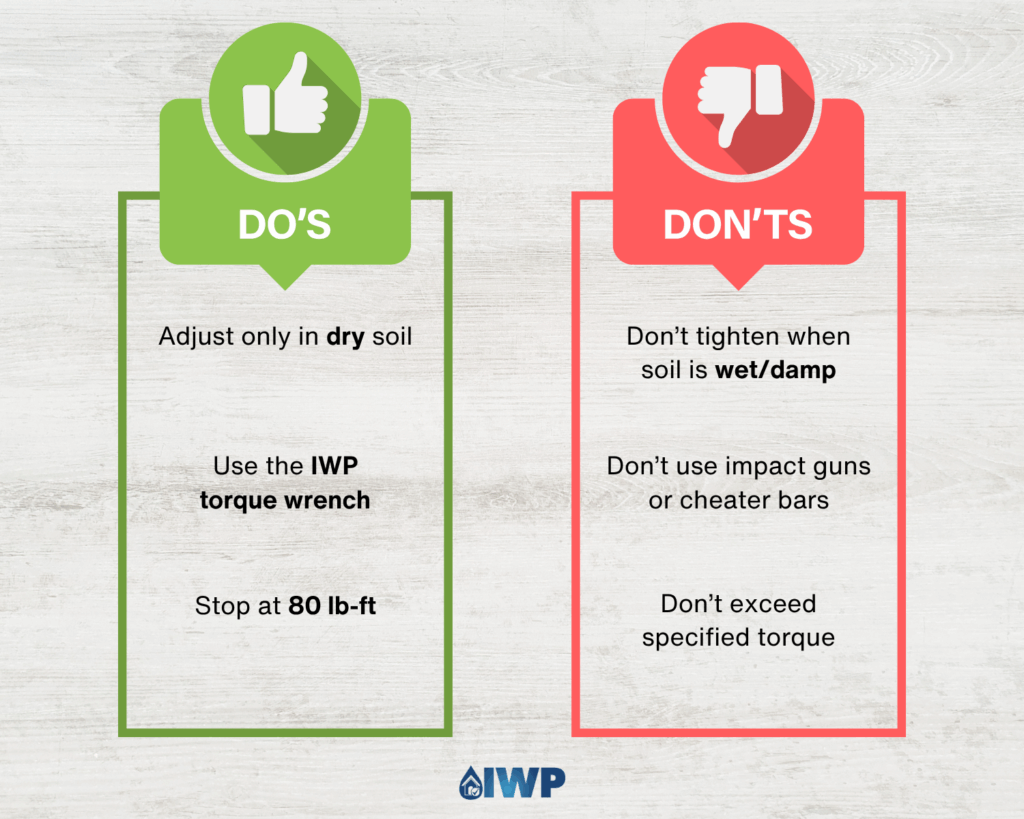
Only adjust when surrounding soil is dry. (Do not tighten in wet or damp conditions.)

2. Prepare Tools

Use the IWP-provided torque wrench and matching socket.

3. Set Torque

Dial your wrench to 80lb-ft.

4. Tighten Anchor

Turn clockwise until the wrench clicks at 80lb-ft. Do not exceed.

5. Check Evenly

If multiple anchors are installed, repeat for each anchor.

6. Record It (Optional)

Note the date; recheck next year

Maintenance & Safety

Maintenance

Annual Check: Inspect anchors once per year to confirm they remain tight-even if the system goal is “stabilize only.”

After Weather Events: Re-check after significant drought/rain/freeze-thaw cycles.

Safety

  • Wear eye protection and gloves.
  • Keep hands clear of moving parts and wrench swing.
  • Do not adjust if the anchor/rod/nut appears damaged -contact IWP.
Why only adjust in dry soil?

Moist or saturated soil can cause misleading torque readings because the ground is softer and allows the anchor rod to move more freely.
If you tighten the anchor when the soil is wet, you might over-tighten it, putting unnecessary stress on the anchor system or the wall itself.
Dry soil gives a more accurate measure of true resistance, ensuring the torque wrench “click” represents proper, safe tension.
In short: Dry soil = accurate readings and long-term stability.
We recommend a full inspection once per year under normal conditions. However, it’s smart to recheck after major weather events like heavy rain, drought, or freeze-thaw cycles.
These conditions cause the soil around your foundation to expand and contract, which can shift pressure on your anchors.
An annual checkup ensures your system continues to perform properly – and helps catch small changes before they turn into costly issues.
Tip: If you’re part of IWP’s Service Program, your yearly inspection already includes this check!
For accurate adjustments, the torque wrench IWP provides is calibrated specifically for our anchor systems. If you don’t have one – or if you’re unsure whether your wrench is reading correctly – call IWP.
We can:
  • Provide a properly calibrated torque wrench
  • Walk you through safe use
  • Or schedule a technician to perform the adjustment for you
Using the wrong tool or guessing at torque levels can lead to over-tightening or damage, so it’s always best to let a technician verify the reading.
We’re here to help – even if it’s just a quick check or loaner tool.
Skipping yearly torque checks can lead to small shifts in soil pressure going unnoticed. Over time, that can allow your wall to begin moving again, especially after heavy rain, drought, or freeze-thaw cycles.
Even if the system was originally installed to stabilize the wall, consistent monitoring ensures it continues to perform as designed.
Think of it like a vehicle alignment – maintenance keeps everything working the way it was meant to.
No – tightening anchors beyond the recommended torque doesn’t make the system stronger. In fact, over tightening can place unnecessary stress on the wall, potentially causing cracking or anchor failure.
Each system is engineered for a specific load, and the 80 lb-ft torque setting ensures the anchor is engaged safely without exceeding those limits.
If you ever suspect a wall is shifting or pressure seems off, call IWP for an evaluation instead of tightening more.
More torque = Not more strength – it’s about the right balance, not brute force.

Leave a Reply